
 Available in US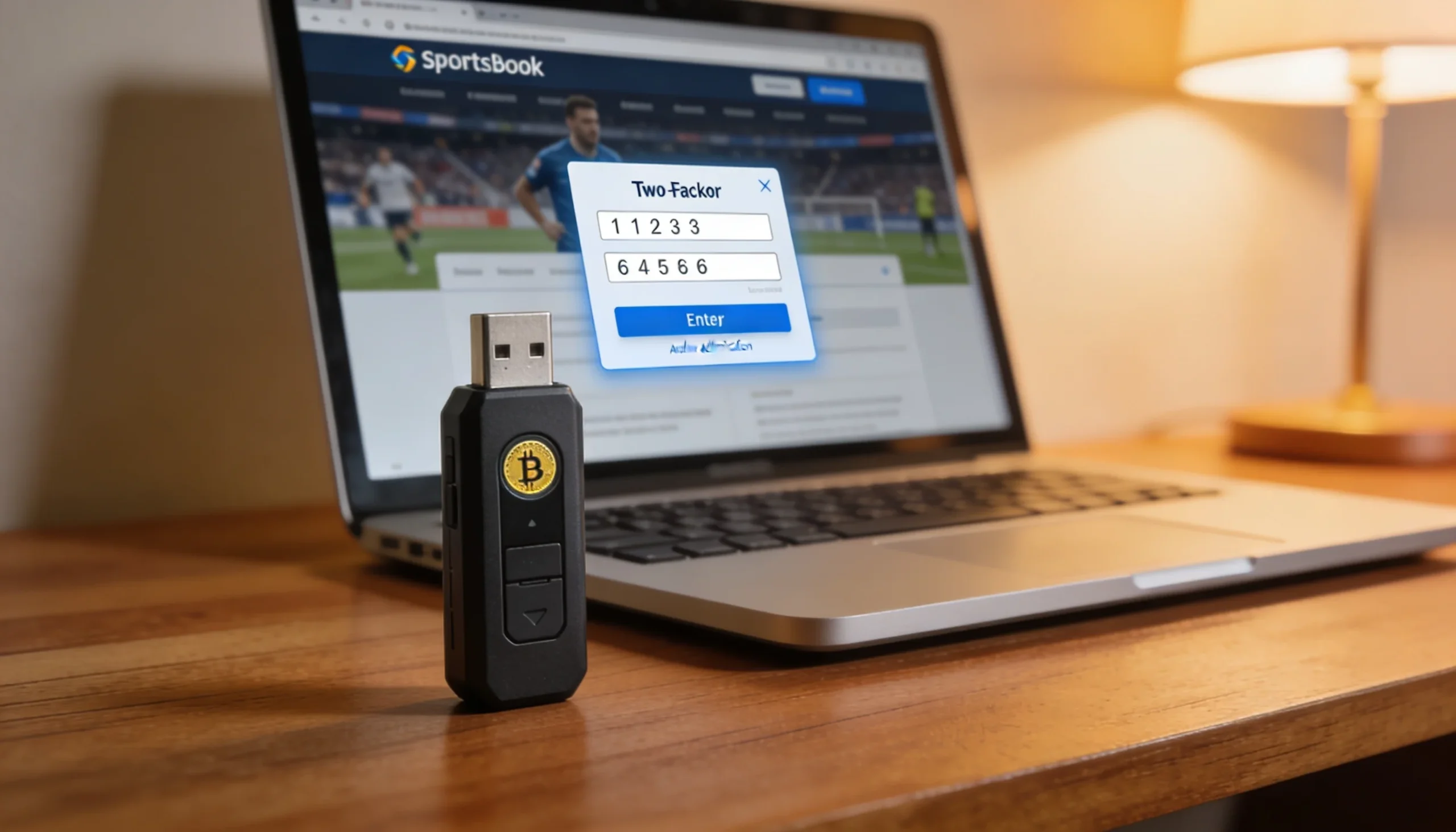
I almost lost 0.3 BTC to a phishing attack in 2021. The email looked exactly like a withdrawal confirmation from my sportsbook, complete with matching branding and a plausible sender address. One click away from entering my credentials on a fake login page, I noticed the URL was off by a single character. That near-miss reshaped every aspect of how I handle bitcoin baseball betting security. The crypto casino industry generated $81 billion in 2025, and where that much money flows, bad actors follow. Securing your funds is not an afterthought — it is the foundation that makes everything else possible.
This article covers the practical security decisions every bitcoin baseball bettor needs to make: the choice between hot wallets and cold storage, how to set up two-factor authentication properly, how to evaluate a sportsbook’s proof of reserves, and the deposit habits that keep your funds safe without adding excessive friction.
While securing your wallet is the first step, understanding the mechanics of anonymous baseball betting with crypto adds an extra layer of privacy to your transactions.
Bankroll Storage: Comparing Hot Wallets and Cold Storage Options
The terminology sounds more technical than it is. A hot wallet is any wallet connected to the internet — a mobile app, a browser extension, or a desktop application. A cold wallet stores your private keys offline, typically on a hardware device like a Ledger or Trezor that never touches the internet unless you deliberately plug it in to sign a transaction.
For a baseball bettor, the practical question is: how much of your bankroll should sit in each? My rule, developed through trial and error, is the “one week” principle. Keep no more than one week’s worth of betting volume in your hot wallet and on your sportsbook combined. Everything else goes into cold storage. If your typical weekly action is 0.05 BTC, your hot wallet and sportsbook balance together should not exceed 0.05 BTC. The rest sits offline, unreachable by phishing attacks, compromised exchanges or sportsbook insolvencies.
The objection I hear most often is convenience: moving funds from cold storage to a hot wallet adds a step before each deposit. That is true, and I consider it a feature, not a bug. The five minutes it takes to plug in a Ledger, authorise a transfer and send bitcoin to your hot wallet is five minutes of deliberate action that prevents impulsive over-betting. If the friction stops you from depositing more than you planned, it is doing its job.
One security consideration specific to sportsbooks: when you deposit bitcoin to a platform, you are giving up custody. Your private keys no longer control those funds — the sportsbook’s keys do. This is why minimising your on-platform balance matters more than it does with a traditional bookmaker, where UKGC regulations mandate fund segregation. On an offshore crypto sportsbook, your deposit is only as safe as the operator’s internal security practices.
Setting Up Two-Factor Authentication on Crypto Sportsbooks
Ninety-five percent of UK adults have home internet access and spend more than four hours online daily. That connectivity creates exposure — every minute online is a minute during which credentials can be compromised. Two-factor authentication is the single most effective countermeasure, and setting it up properly takes less time than placing a bet.
The best 2FA method for crypto sportsbooks is an authenticator app — Google Authenticator, Authy or Microsoft Authenticator. These generate a six-digit code that rotates every thirty seconds and is tied to your specific device. Even if someone steals your password, they cannot access your account without the rotating code from your phone. SMS-based 2FA is better than nothing but vulnerable to SIM-swap attacks, where an attacker convinces your mobile carrier to transfer your number to their device.
The setup process is nearly identical across sportsbooks. Navigate to security settings, select “enable 2FA” or “authenticator app,” scan the QR code with your chosen app, and enter the verification code to confirm. The entire process takes under two minutes. The step that most people skip — and should not — is saving the backup recovery codes the platform generates during setup. If you lose your phone or it breaks, those recovery codes are the only way back into your account without contacting customer support and enduring a lengthy verification process.
I enable 2FA on every crypto sportsbook account, every exchange account and every email address connected to those accounts. The chain is only as strong as its weakest link: a compromised email address can be used to reset a sportsbook password, bypass 2FA, and drain your balance. Securing the email is as important as securing the sportsbook itself.
Proof of Reserves: How to Verify a Sportsbook’s Holdings
Chris Elliott at Wiggin LLP has argued that crypto can support a more robust control environment than fiat payments in certain respects. Proof of reserves is a concrete example of that claim. A sportsbook that publishes proof of reserves allows anyone to verify — cryptographically — that the platform holds enough assets to cover all player deposits. No traditional bookmaker offers anything equivalent.
The standard approach uses a Merkle tree: the sportsbook hashes each user’s balance into a tree structure, publishes the root hash, and provides individual users with a path to verify their balance is included. You can confirm that your specific deposit is accounted for in the total reserves without the sportsbook revealing anyone else’s balance. Combined with an on-chain address that shows the total BTC held, proof of reserves gives a transparent snapshot of solvency.
The limitation is timing: proof of reserves is a point-in-time snapshot, not a continuous guarantee. A sportsbook could publish a valid proof of reserves on Monday and move funds off-platform on Tuesday. Some platforms address this by publishing reserves on a regular schedule — weekly or monthly — and allowing real-time address monitoring. Others publish once and never update, which should be treated with scepticism.
Before depositing any significant amount, I check three things: does the sportsbook publish proof of reserves, how recently was it updated, and do independent observers (blockchain analytics firms, community auditors) corroborate the published numbers? A platform that refuses to provide any reserves data is not necessarily a scam, but it is asking for a level of trust that the technology exists to eliminate.
Safe Deposit Practices for Bitcoin Baseball Betting
The deposit is the most vulnerable moment in the entire betting cycle. You are sending irreversible cryptocurrency to an address you trust to be controlled by the sportsbook, and there is no chargeback mechanism if something goes wrong. A few simple practices reduce the risk to near zero.
Learn how to protect your digital assets with our secure Bitcoin baseball betting guide.
Always copy the deposit address from the sportsbook’s interface rather than typing it manually. A single wrong character sends your bitcoin to a nonexistent address or, worse, an address controlled by malware. Some clipboard-hijacking malware specifically targets crypto deposit flows by replacing the copied address with an attacker’s address. Verify the first and last four characters of the address after pasting to catch any substitution.
Send a small test deposit before transferring your full amount. I send the minimum accepted deposit first, confirm it arrives in my sportsbook balance, and only then send the remainder. This adds a few minutes and a small extra network fee, but it eliminates the risk of losing your entire deposit to a wrong address, an unsupported network or a platform that is not functioning correctly.
Bookmark your sportsbook’s URL and always access it through the bookmark rather than through search results or email links. Phishing sites that impersonate crypto sportsbooks frequently appear in paid search results and look identical to the real platform. A saved bookmark bypasses the search engine entirely and ensures you are always on the legitimate site.
Articles
Published by the baseballbetb team.
