
 Available in US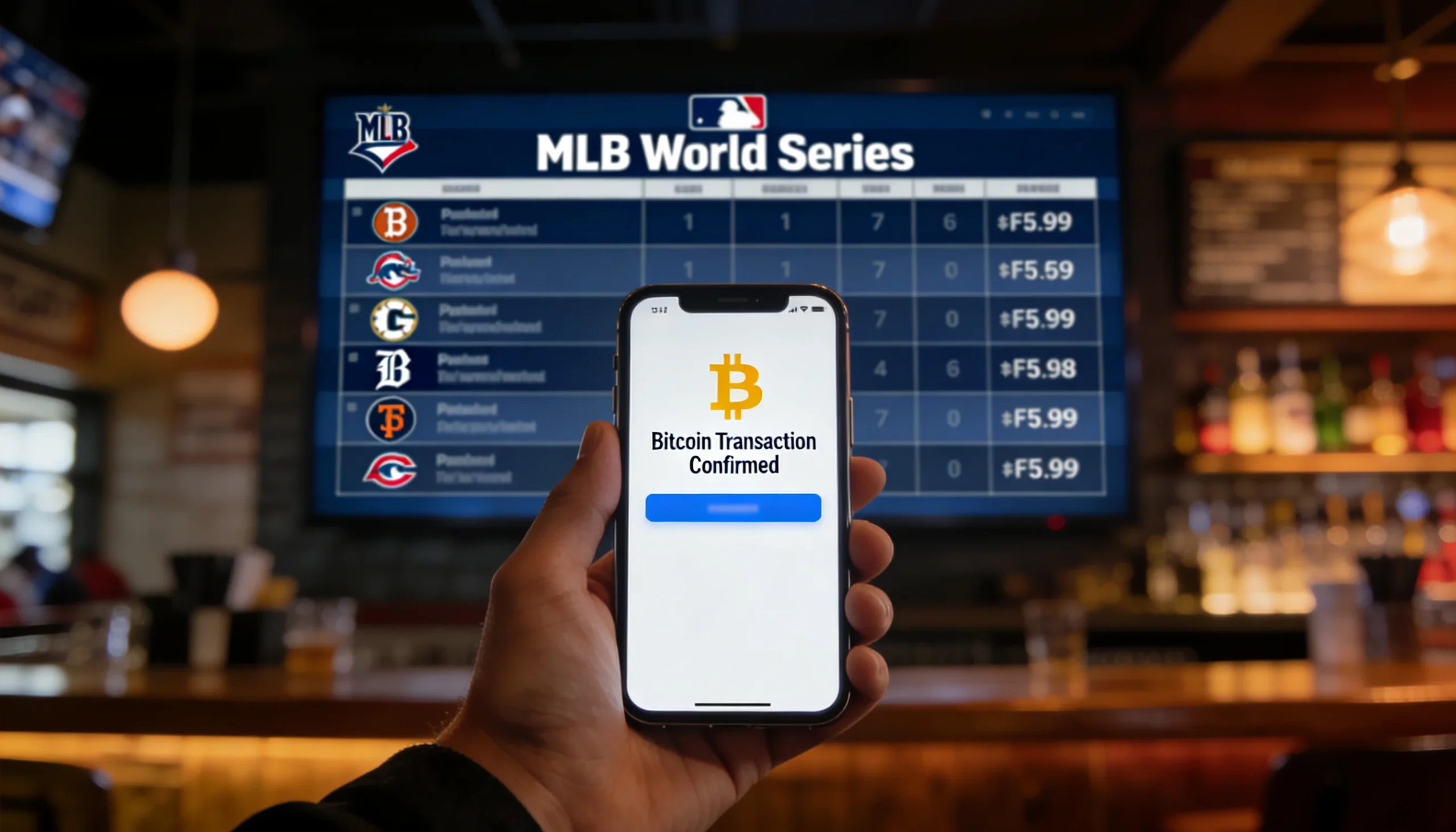
I locked in a World Series futures bet on the Orioles in November 2024 at 18/1 on a crypto sportsbook. By the trade deadline the following July, those same odds had compressed to 6/1. I did not wait for October – I hedged the position on a second platform and guaranteed a profit regardless of outcome. That sequence captures everything I love about MLB futures crypto betting: early entry, patience, and the ability to move funds between platforms fast enough to exploit shifting lines. MLB generated a record $12.1 billion in revenue in 2024, and the futures market around that commercial engine is one of the richest in all of sports betting.
This article covers when to enter World Series futures for maximum value, how award markets like MVP and Cy Young work on crypto platforms, what division and pennant futures offer, and practical approaches to hedging your positions using cryptocurrency’s speed advantage.
World Series Futures: Timing Your Entry for Maximum Value
MLB attendance reached 71.4 million in 2025 – the third consecutive year of growth and the first time that has happened since 2005-2007. That expanding fan base translates directly into deeper futures pools and more competitive pricing. But value in World Series futures is overwhelmingly concentrated at the front end of the calendar.
The best window opens the day after the World Series ends. Sportsbooks post preliminary lines for the following season within hours, and those early prices reflect offseason uncertainty – free agency, trades, managerial changes – that create exploitable gaps. A team about to sign a front-line starter might be priced at 25/1 when the informed bettor knows the deal is close. By the time the signing is official, those odds have halved.
Spring training is the second window. Prices adjust based on roster battles, injury reports and early performance data, but the adjustments lag behind reality because casual bettors do not pay attention until Opening Day. I have found consistent value backing teams whose spring training indicators – bullpen depth, lineup construction, starting rotation health – suggest they are better than the market believes.
The trade deadline in late July is the third and final value window. Contenders load up on rentals, pretenders sell, and the futures board reshuffles dramatically over a 48-hour period. Crypto’s instant deposit capability is a genuine edge here: you can spot a value shift, fund your account via Lightning in seconds, and place the bet before the line moves. On a traditional bookmaker, the same deposit might take hours via bank transfer, by which point the price has already adjusted.
After the trade deadline, MLB odds on crypto sportsbooks tend to reflect the market efficiently enough that finding futures value becomes significantly harder. The postseason is a different animal entirely – prices move on game-by-game results and are driven more by recency bias than fundamental analysis.
MVP, Cy Young and Rookie of the Year Futures
Award futures are where crypto sportsbooks separate themselves from UKGC-licensed bookmakers most visibly. Most UK-regulated platforms barely touch MLB awards – you might find World Series winner and nothing else. Crypto sportsbooks routinely offer AL and NL MVP, Cy Young, Rookie of the Year, and sometimes Manager of the Year and Comeback Player of the Year.
The pricing on award markets tends to be softer than game-level betting because the sportsbook’s models are less sophisticated for individual player outcomes over a 162-game sample. ERA leaders can be predicted with reasonable accuracy using spring FIP and xFIP projections, and if you do that analysis while the book relies on name recognition and previous-season results, you will occasionally find genuine value.
One quirk worth noting: award futures on crypto platforms often have lower limits than moneyline or run line bets. The sportsbook knows these markets are lightly modelled and caps their exposure accordingly. If you are trying to place a significant wager – say, 0.05 BTC – on a Cy Young future, you may need to split it across multiple platforms. This is where holding accounts on three or four crypto sportsbooks pays off, and crypto’s portability makes moving funds between them trivial.
Division and Pennant Futures on Crypto Platforms
Division winners and pennant futures sit in the sweet spot between the headline World Series market and the niche award bets. Paul Leyland, a partner at Regulus Partners, has observed that by ignoring crypto, operators effectively push their highest-value customers into an unregulated ecosystem – and division futures are a prime example. UK-licensed bookmakers offer limited MLB division markets. Crypto sportsbooks offer all six divisions, often with win-total over/unders for each team.
The analytical advantage in division futures comes from understanding schedule strength, divisional head-to-head records, and ballpark effects across a division’s home stadiums. The AL East and NL West tend to be the most competitive and therefore the most interesting from a betting standpoint – pricing inefficiencies emerge when one team in a tight division makes a mid-season move that the market underreacts to.
Pennant futures (betting on which team wins the AL or NL championship series) are priced off World Series odds but carry their own value dynamics. A team with a clear path through a weak division might be underpriced for the pennant even if their World Series odds are fair, because the market overweights the opponent they would face in the Championship Series.
Hedging Futures Bets with Crypto: Practical Approaches
Hedging is where crypto’s speed becomes a structural advantage rather than a marginal convenience. When your 20/1 futures bet reaches the postseason and the team is now 3/1, you have a decision: ride it out or guarantee profit. On a traditional platform, hedging requires depositing funds via bank transfer to a different bookmaker, waiting for clearance, and placing the hedge bet – a process that can take days. With crypto, you can fund a second sportsbook via Lightning in seconds and place the hedge before the line moves.
The basic hedge calculation is straightforward. If you bet £50 at 20/1 (potential payout £1,050) and your team is now 3/1, you can bet approximately £260 on the opponent at even money to guarantee a profit regardless of outcome. The exact amounts depend on the current odds and your target guaranteed profit, but the principle holds: lock in value when the market has moved in your favour.
I hedge roughly a third of my MLB futures bets. The rest I let ride, because the variance is part of what makes futures interesting. But having the ability to hedge instantly – without the friction of fiat banking – means I never miss a window because my deposit was stuck in processing. That alone has saved me from leaving money on the table more times than I can count.
Articles
Prepared by the baseballbetb editorial staff.
