
 Available in US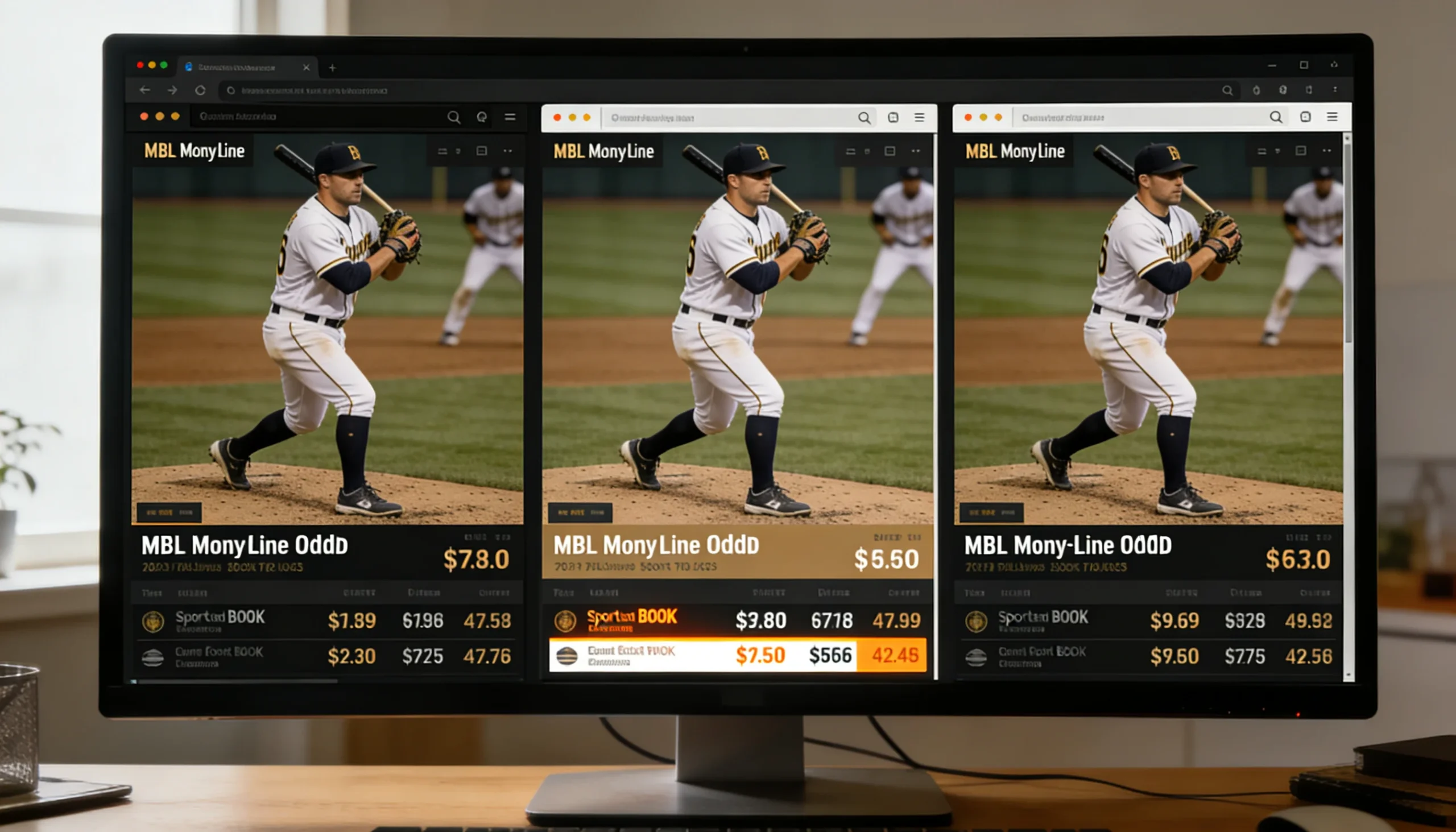
I ran the numbers after the 2024 MLB season and discovered that line shopping across three crypto sportsbooks instead of betting on a single platform would have added £340 to my annual profits — on an identical set of bets with identical analysis. The only variable was which sportsbook I placed each wager on. The average hold percentage for US sportsbooks hit 10.15% in 2025, and crypto sportsbook odds comparison for MLB is the simplest, most reliable way to claw back a meaningful portion of that margin. No new skill required, no additional research — just discipline to check multiple platforms before clicking “place bet.”
This article explains how to compare MLB odds effectively across crypto platforms, digs into margin analysis to identify which books consistently offer the tightest lines, and provides a practical line-shopping workflow that any bitcoin baseball bettor can implement today.
Line Shopping: Finding the Best MLB Odds on Crypto Platforms
The concept is straightforward: different sportsbooks price the same game differently, and betting at the best available price across multiple platforms produces better long-term returns than being loyal to one. What trips people up is the execution — comparing odds in different formats, across platforms with different interfaces, on a tight timeline before the line moves.
Start by standardising the format. Crypto sportsbooks display odds in decimal, American or fractional format, and not all use the same default. I set every platform to decimal because it makes comparison instant: the higher decimal number is the better price. A moneyline of 2.15 on one platform versus 2.08 on another tells you immediately which one to bet on. No conversion needed.
Open the same game on three or four platforms simultaneously. I use browser tabs on desktop — one per sportsbook, arranged so I can see the moneyline, run line and totals for the same game across all platforms at a glance. The entire comparison takes thirty seconds once you have the tabs open. For a bettor who places one or two MLB bets per day, that thirty seconds of comparison work can add 1–3% to your annual return on investment.
One detail that matters: check the odds at the same time. A five-minute gap between checking Platform A and Platform B may mean the line has moved on one and not the other, making the comparison unreliable. I open all tabs, refresh simultaneously, and place the bet within sixty seconds of the comparison. Crypto’s instant deposit capability via Lightning means I can fund whichever sportsbook has the best line without delay.
Margin Analysis: Which Crypto Books Offer the Tightest MLB Lines
Sportsbook margin — the percentage the bookmaker builds into the odds to guarantee a profit regardless of the outcome — is the hidden cost of every bet you place. Sports betting accounts for 52% of all online gambling revenue globally, and margins are how the industry generates that revenue. For MLB bettors, understanding which crypto sportsbooks offer the tightest margins is the single most impactful piece of platform research you can do.
Margin calculation is simple. Take a two-way market (moneyline), convert both sides to implied probabilities, and add them together. If the favourite is at 1.65 (implied probability 60.6%) and the underdog is at 2.35 (implied probability 42.6%), the total is 103.2%. The margin is 3.2%. The lower that number, the better the deal for the bettor.
In my testing across crypto sportsbooks during the 2025 MLB season, margins on moneyline markets ranged from 2.5% on the tightest platforms to 7.5% on the widest. That is a threefold difference in the cost of placing the exact same bet. Over 200 bets in a season, the cumulative impact is substantial — the difference between a 3% margin and a 6% margin on a £100 average stake is roughly £600 in extra vigorish paid to the sportsbook.
Prop markets carry even wider margins, typically ranging from 5% to 15%. This is partly because props attract less volume and partly because the modelling is less precise. If you bet props regularly, the platform selection matters even more than it does for moneyline — a 10% prop margin versus a 6% prop margin on the same MLB odds is the difference between a sustainable approach and a slow bleed.
A Line-Shopping Workflow for Bitcoin Baseball Bettors
Chris Elliott and Marcus Bagnall at Wiggin LLP have observed that the regulated sector’s fiat-only stance creates a two-tier market: crypto-convenience offshore and compliance friction onshore. For bettors who have already chosen the crypto side of that divide, line shopping across multiple offshore platforms is the logical next step — and the workflow is simpler than it sounds.
Step one: maintain funded accounts on three to four crypto sportsbooks with strong MLB coverage. You do not need large balances on each — just enough for one or two bets. Lightning Network makes moving funds between platforms trivial, so you can shift your bankroll to wherever the best line sits for tonight’s game.
Step two: when you have identified a bet, check all platforms before placing it. Compare the decimal odds on the specific market you want — moneyline, run line or total. Note the best price and the worst price. If the difference is meaningful (0.05 or more in decimal odds on a moneyline, or 0.10 or more on a prop), place the bet on the platform with the best price.
Step three: record the price you got and the best available closing price. Over time, this record shows you which platforms consistently offer the best lines for specific market types. You may find that Platform A is strongest on moneylines, Platform B on totals, and Platform C on props. That pattern lets you pre-route your bets efficiently rather than checking every platform for every bet.
The time investment is minimal — perhaps five minutes per bet. The financial return is measurable within a single MLB season. Of all the betting improvements I have made in nine years, adopting a systematic line-shopping workflow had the highest ratio of effort to reward.
Articles
Prepared by the baseballbetb editorial staff.
